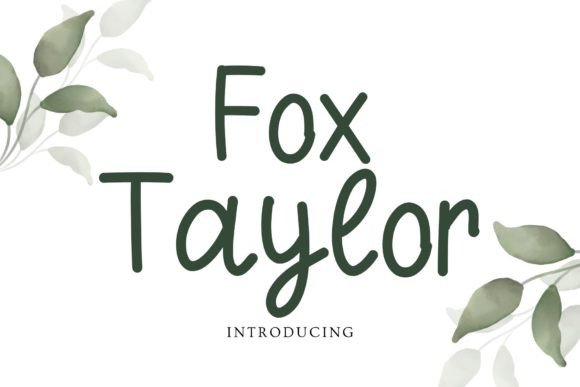
Fox Taylor: Crafting Authenticity with a Handwritten Script Font
In a digital landscape saturated with sterile interfaces and algorithmic precision, the human touch has become a premium commodity. We crave connection, warmth, and the imperfect beauty of something made by hand. This is precisely the feeling evoked by Fox Taylor, a charming handwritten script font that moves beyond mere text to become a storyteller. It’s more than just a collection of glyphs; it’s a design asset built to infuse projects with personality, nostalgia, and a distinct, approachable elegance. For designers, entrepreneurs, and creators, understanding how to harness this typeface can be the key to transforming a good design into a memorable one.
The Anatomy of Charm: Deconstructing the Fox Taylor Aesthetic
At its core, Fox Taylor is a study in balanced fluidity. Its letterforms are crafted with a natural, flowing rhythm that mimics the slight variations and organic connections of real handwriting. You’ll notice playful curves that give it a spirited energy, yet they’re tempered by a legibility that prevents it from descending into visual chaos. This isn’t a frantic scrawl; it’s a thoughtful, cozy script with a consistent baseline and carefully considered spacing. The visual personality is one of warmth, approachability, and a touch of whimsical nostalgia. It feels personal without being childish, elegant without being stuffy. This delicate balance makes Fox Taylor a remarkably versatile creative font, capable of adapting to a wide array of project tones while maintaining its core identity.
When evaluating a premium font like this, it’s helpful to consider its emotional resonance. Fox Taylor doesn’t shout for attention; it invites you in. Its soft, rounded terminals and gentle slant create a sense of comfort and reliability. Think of the difference between a typed note and a handwritten one—the latter inherently carries more weight, more care. This typeface leverages that psychological principle. Using it in your designs is a strategic choice to communicate authenticity and a human-centric approach, which can significantly influence brand perception and audience engagement.
Strategic Applications: Where Fox Taylor Truly Shines
Knowing a font is charming is one thing; knowing where to deploy it for maximum impact is another. The strength of a script font like Fox Taylor lies in its ability to add a focal point of personality without overwhelming a layout. It’s a specialist, not a generalist, and its applications are where its value truly crystallizes.
Brand Identity and Logo Design
For brands that want to project warmth, craftsmanship, and a personal touch, Fox Taylor can be a cornerstone of their visual identity. Imagine a boutique bakery, a handcrafted jewelry line, a cozy café, or a wellness studio. Using this typeface for a primary logo or a secondary brand mark instantly communicates the brand’s ethos. It suggests that products are made with care and that customer relationships are valued. However, a crucial design consideration is pairing. A bold, clean sans serif font is often the perfect companion for body copy, ensuring readability while letting the script font’s character shine in headlines and logos.
Packaging and Editorial Design
On a crowded shelf or a digital storefront, packaging design is your first and most critical handshake with the customer. Fox Taylor excels here, adding a tactile, artisanal quality to labels, tags, and boxes. It’s particularly effective for product names or short, evocative phrases like “hand-poured” or “small batch.” In editorial design, think of magazine pull quotes, chapter titles in a lifestyle book, or the masthead of a food blog. It draws the eye and breaks the monotony of standard body text, creating visual hierarchy and a more engaging reading experience.
Digital Presence and Marketing Collateral
The application extends seamlessly into the digital realm. For web design, use it sparingly in hero sections, call-to-action buttons, or section headers to inject personality. It’s a powerhouse for social media graphics, making quotes, announcements, and stories feel more personal and shareable. For entrepreneurs and small business owners creating their own marketing materials—from thank you cards and invoices to email headers and promotional flyers—this font provides a consistent, professional-yet-personable voice. It turns a standard business document into a touchpoint that reinforces brand identity.
A Practical Guide to Using Fox Taylor Effectively
Adopting a new typeface into your toolkit requires more than just installation. Thoughtful implementation ensures it enhances rather than hinders your projects. Here’s how to approach Fox Taylor with a strategist’s mindset.
- Evaluate Project Fit: Start by asking if the project’s tone aligns with the font’s personality. Is it aiming for warmth, authenticity, and approachability? A corporate legal brief might not be the right fit, but a community event poster absolutely is.
- Master the Font Pairing: This is non-negotiable. Script fonts demand a counterpart. Pair Fox Taylor with a highly legible serif font for a classic, elegant feel, or with a geometric sans serif for a modern, clean contrast. The goal is balance: let the script handle the emotional headlines and let the other font manage the informational body text.
- Review the Full Character Set: Explore the included styles, ligatures, and alternate characters. Many premium fonts include swashes or stylistic alternates that can add extra flair to specific letters. Using these thoughtfully can elevate a design from good to exceptional, but overuse can quickly look cluttered.
- Prioritize Readability: Always test at the intended size and on the intended medium. What looks beautiful on a large poster might become illegible at 12px on a website. For body copy or lengthy text, it’s generally best to avoid script fonts altogether. Reserve Fox Taylor for headlines, subheadings, and short, impactful statements.
- Understand the Licensing: If you plan to use the font for commercial projects—a client’s logo, products for sale, monetized content—ensure you have the correct commercial license. This protects both you and the font creator and is a hallmark of professional practice.
Ultimately, a font like Fox Taylor is a tool for connection. In our quest for polished perfection, we often design the humanity out of our work. This typeface is a deliberate step in the opposite direction. It reminds us that the most resonant designs are those that feel genuine, that tell a story, and that acknowledge the hand of the creator. By thoughtfully integrating it into your projects, you’re not just choosing a style of lettering; you’re choosing to communicate with more heart, more warmth, and more authenticity. That is its true, enduring value in the modern typographic landscape.